C Magazine
Contemporary Art Magazine
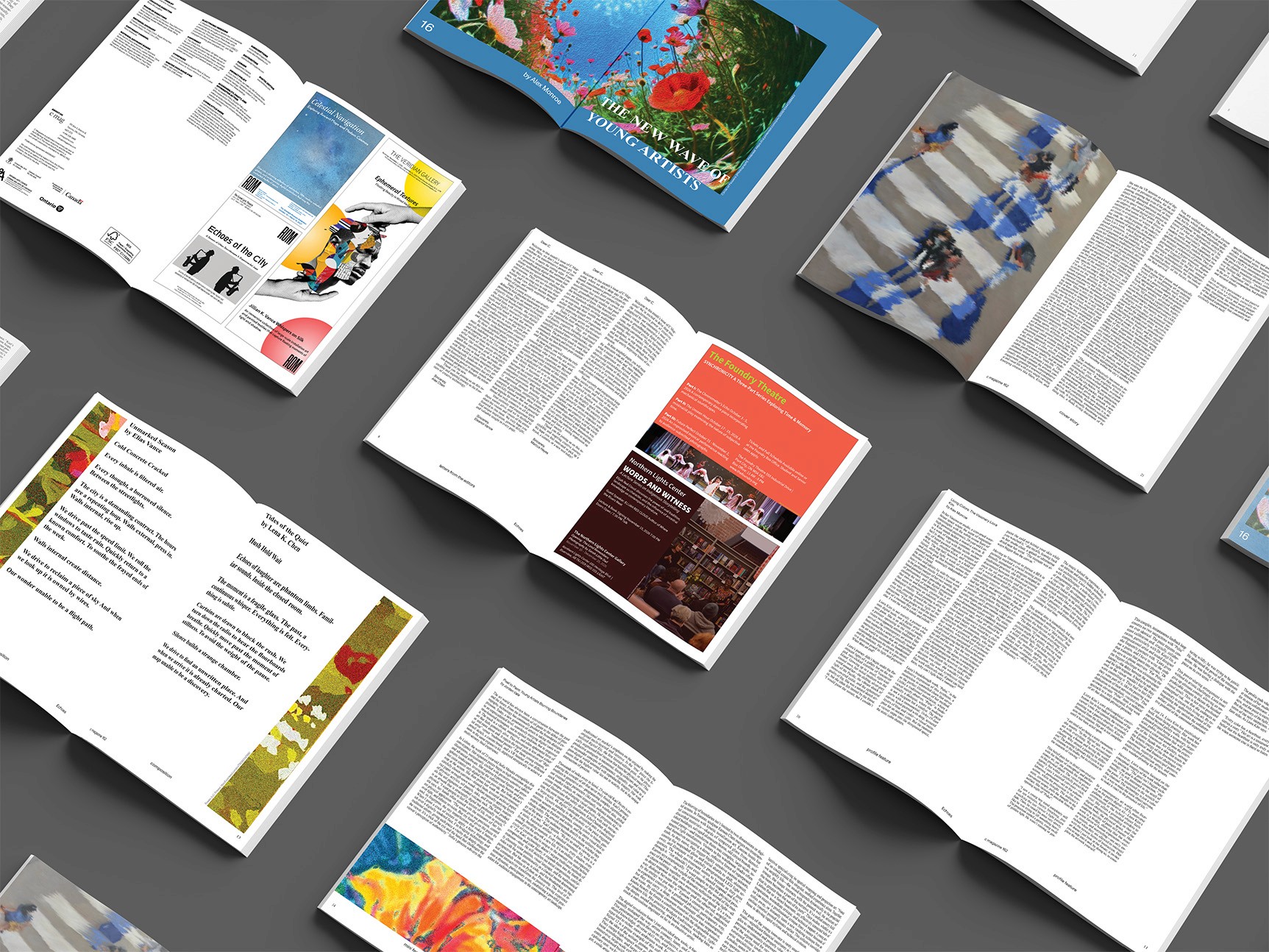
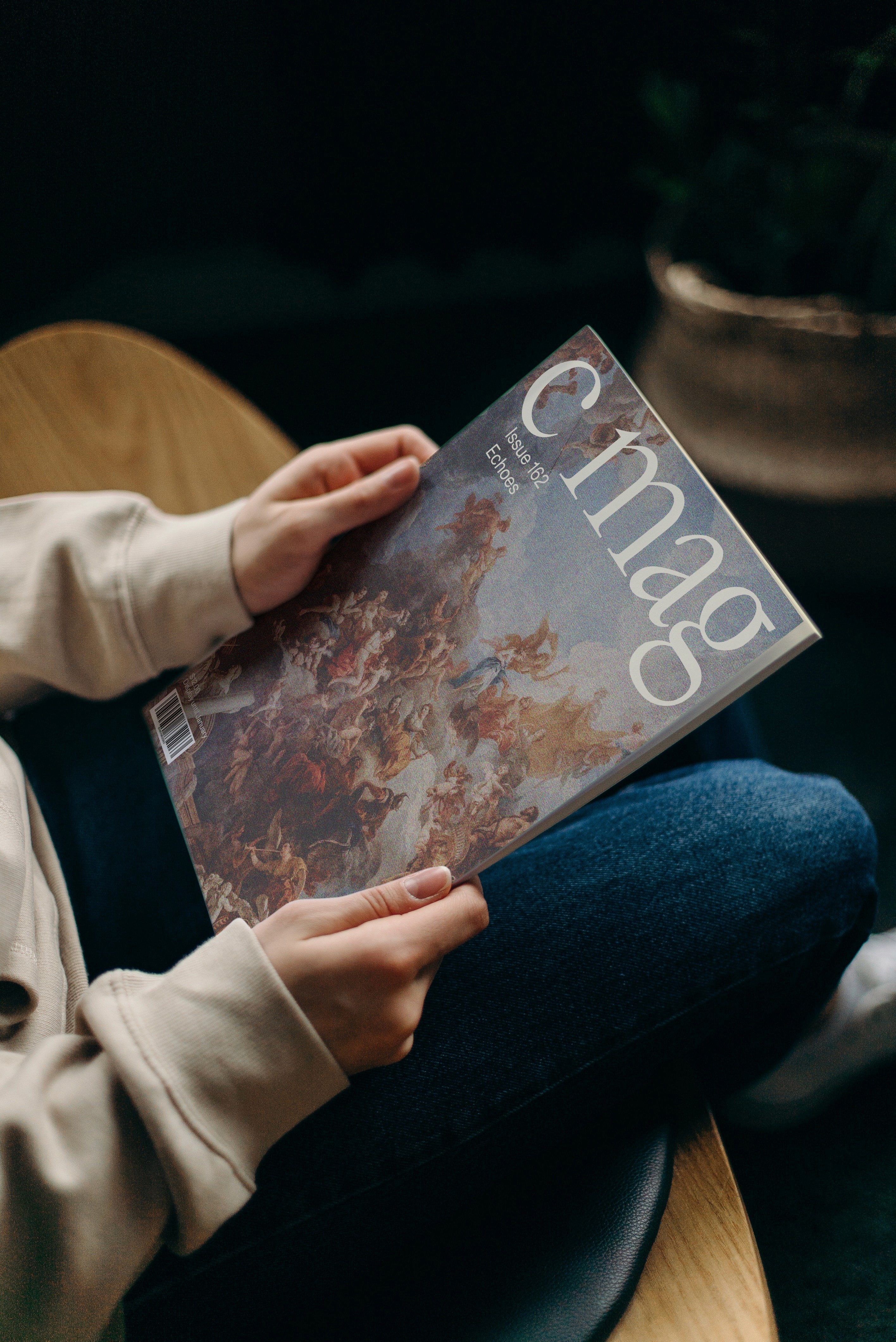
This project is an editorial case study of C Magazine, a Canadian non-profit publication focused on contemporary art and criticism. The study examined Issue 160, Extra Life, analyzing the magazine’s structure, audience, and visual systems through the lens of design strategy. By exploring typography, layout, grid systems, and visual hierarchy, the project highlights how editorial design supports the magazine’s critical yet accessible voice while maintaining consistency across a long-running publication.
Category
Editorial
Client
Editorial 01
Services
Editorial Designer, Graphic Designer
Year
2025
challenge.
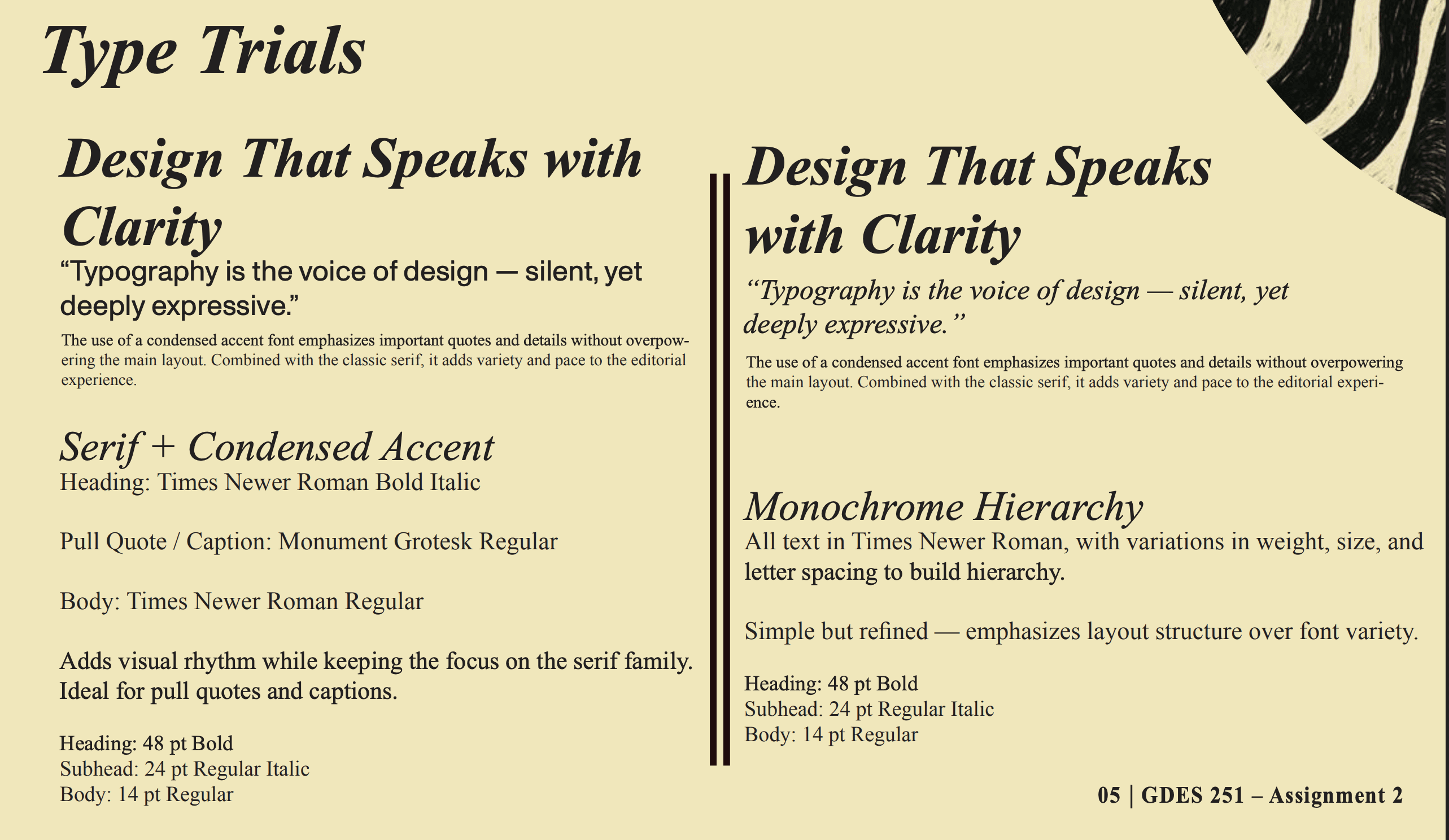
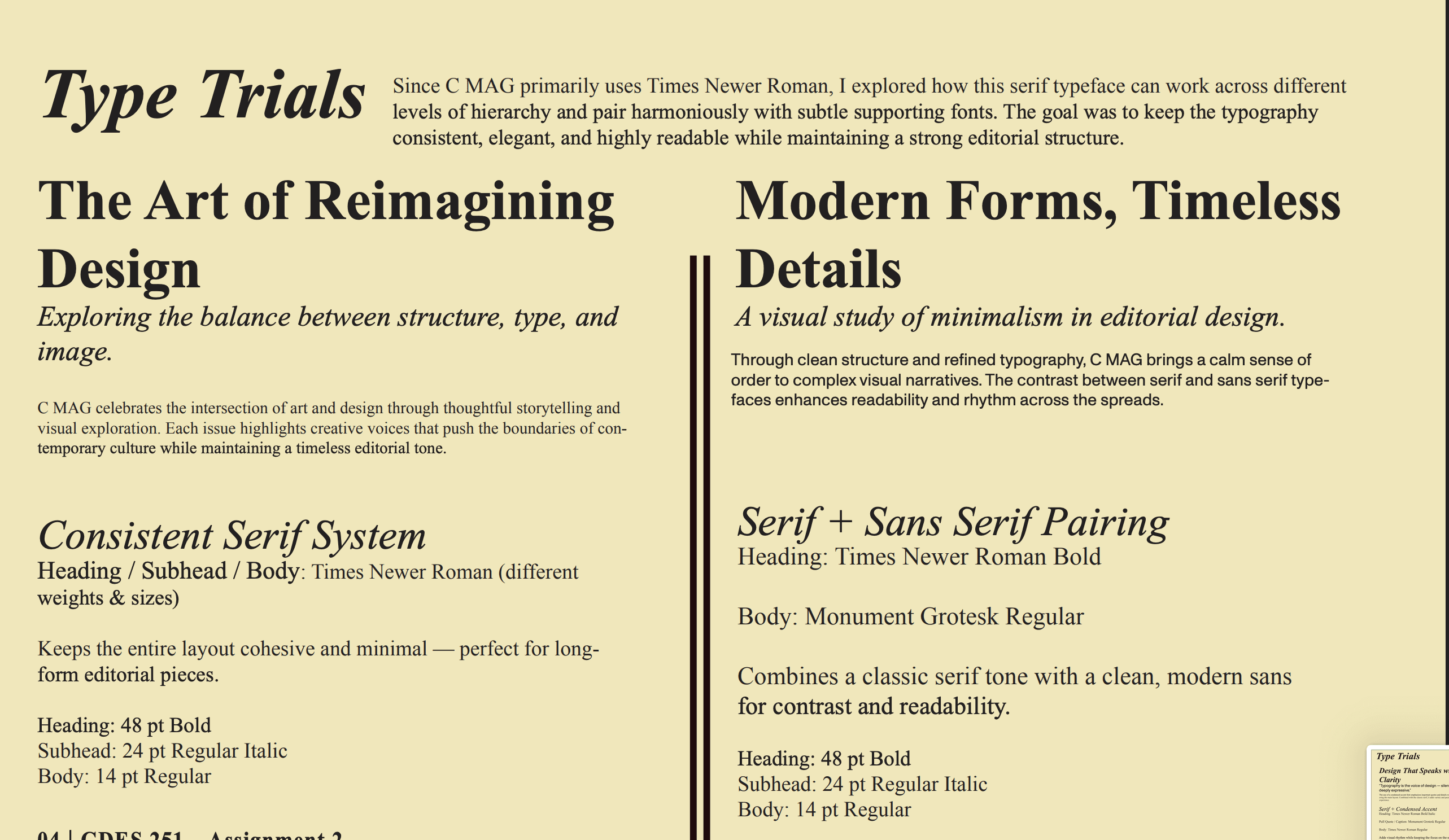
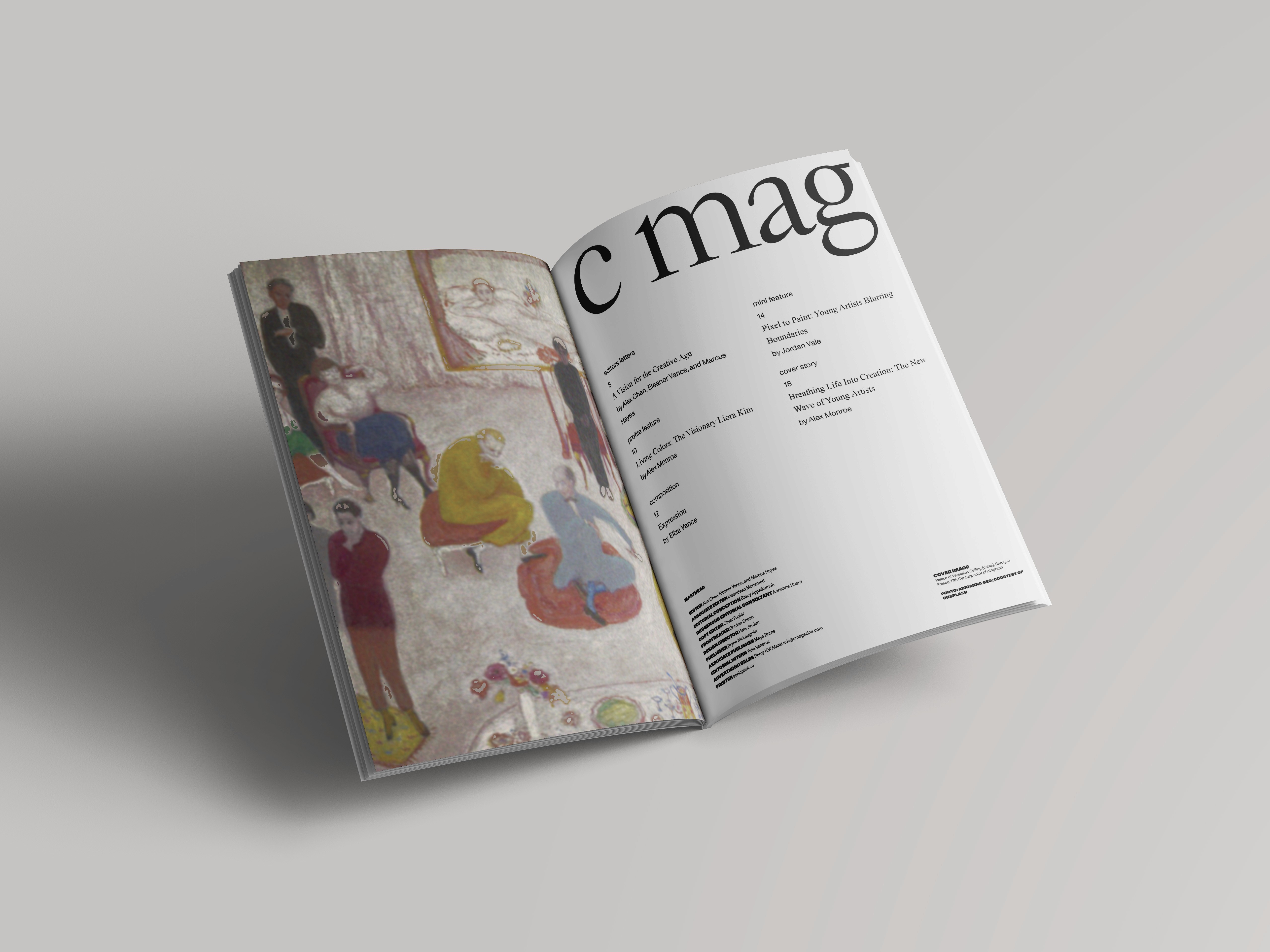
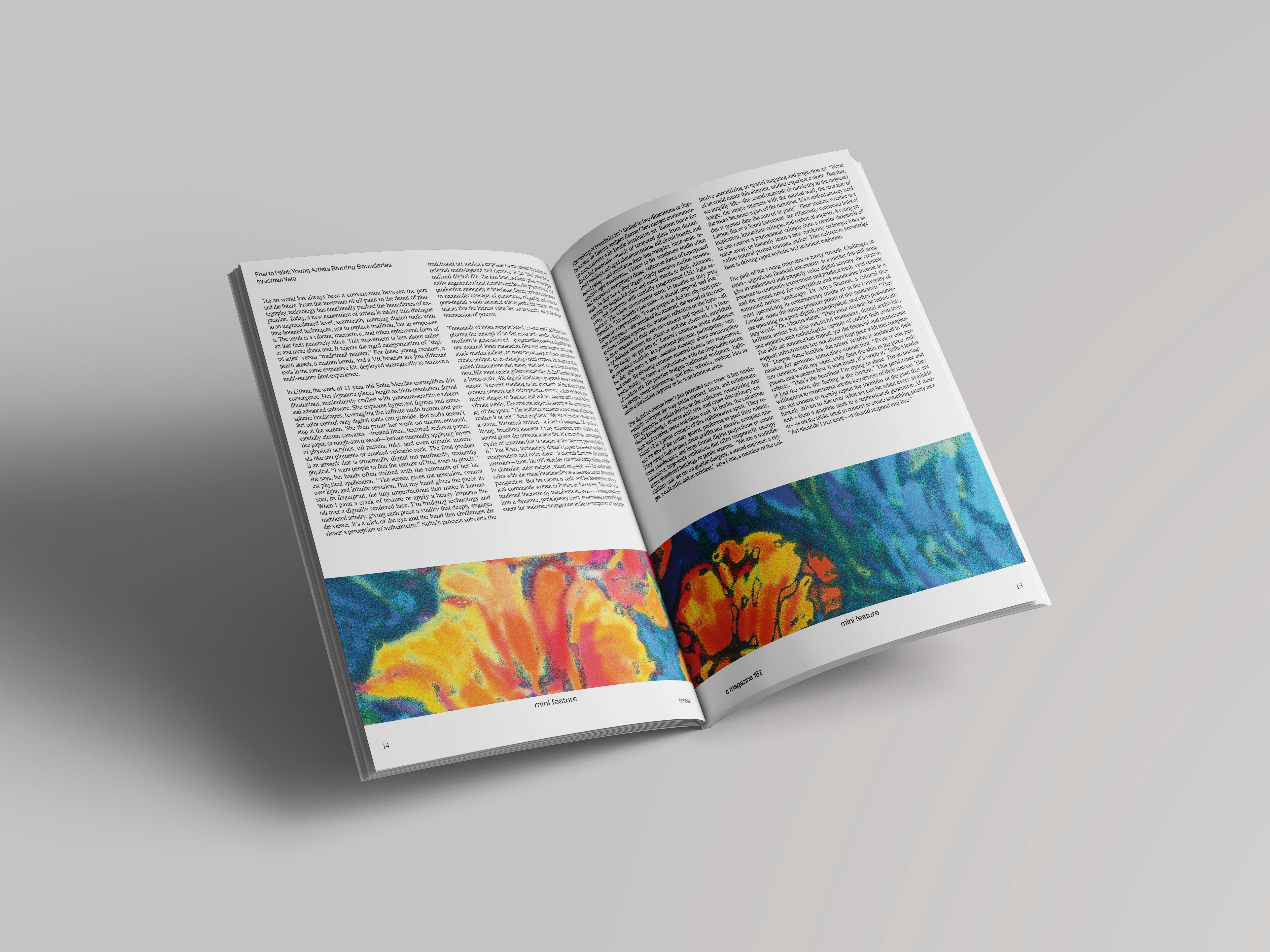
The main challenge was translating a content-rich, intellectually dense magazine into clear, readable design systems without losing depth or nuance. C Magazine balances scholarly writing with contemporary visual culture, requiring careful attention to typographic hierarchy, layout, and pacing. Another challenge was turning editorial observations—such as grid usage, framing, and typographic choices—into structured insights that could inform future design decisions rather than remaining purely descriptive.
solution.
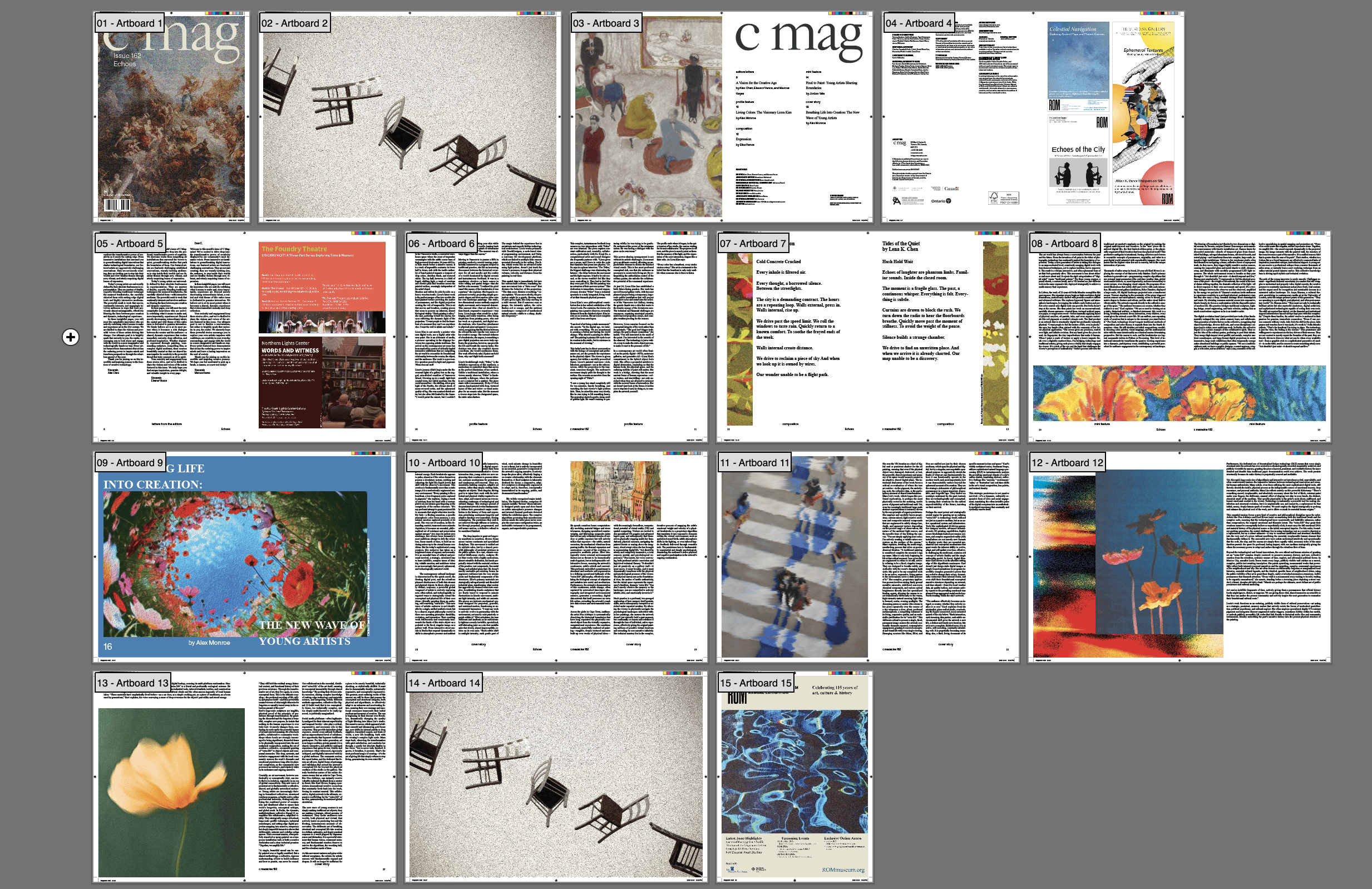
The solution was a systematic breakdown of the magazine’s editorial and visual design. The project focused on key components: audience and positioning, editorial function and tone, typography pairings that balance scholarly and modern aesthetics, grid and layout structures, and visual consistency across issues. By analyzing frames, past editions, and typographic treatments, the study demonstrates how C Magazine functions like a curated gallery where content leads and design supports readability, rhythm, and cohesion.
results.
The final case study clearly communicates how design systems reinforce C Magazine’s identity and values. It highlights editorial principles such as hierarchy, pacing, and grid-based layouts while showing how thoughtful design enhances clarity and reader experience. This project strengthened my ability to analyze editorial design critically, translate research into actionable insights, and apply structured frameworks that inform future publication work, demonstrating sensitivity to content, audience, and visual storytelling.